Friday, February 18, 2011

The Frustrations of Travelling by Bus in Kampala

OK so you would think after taking the same route to the same place 4 times, one would understand how to get there alone.  Nope, not for Amy Hanna, or anyone else I speak to trying to get around outside of Kampala on their first time.  It’s all about specifics. You see, I was trying to get from Naguru, a “suburb” of Nakasero – the down town, to a bus going to the New Taxi Park (within Nakasero), to Kikajjo, which is within the village of Natete- only 9km from Nakasero.  2 buses was all I needed. I took three and walked in between...
First, I got on a bus that told me I was going to New Park, when in fact it was going yes to Nakasero, but not directly to the New Park. I had to retrace my steps a few blocks then hang a corner and go far down the street, a 20 minute walk (I asked for directions at every block to make sure).  The city is crowded, imagine NYC with more [organized] chaos, and not many sidewalks.  The cars will run into you just the same. The New Taxi Park is similar and across the street from the Old Park, but they both function the same.  Imagine a filthy parking lot filled with buses, and people walking around selling anything you can think of, then imagine exhaust, and all eyes on your every move, as you move through a maze of buses about to run you over and not knowing in what direction you need to go to find “your bus”.  It once took me and Jonna an hour just to get out of the bus station to begin our trip outside of Kampala one day, the traffic is so bad in this city.  I asked for “Natete”, but what I should have asked for was “Kikajjo within Natete”.   I have found women and men all over the city equally pleasant towards me when I ask for directions or information. And everyone speaks some form of English, but it can be easily misunderstood.  I quickly realized my mistake, when the bus came to the main intersection in Natete and didn’t turn…
Insert:  A “taxi” in Uganda is a matatu. A matatu is a mini-bus that can seat 4 people across, in 4 rows, plus 2 people in the one passenger seat.  A ride cost about $0.25-.050 (500-1000 shilling) depending on how far you go.  If you take a matatu to go grocery shopping you can be sure that you will have no room for your groceries on the way home. You will stick your food in spaces you never thought were possible, and it will come out hot.   A “bus”in Uganda is the big one that goes from larger cities to larger cities.  For instance, I took a “bus” from Fort Portal to Kampala when I visted The Kasiisi Project in Kibale NP, 5 hours drive to the west.  That cost me $10, or 20,000shilling.  A “private hire” is what we in the States as a taxi, or a cab. They cost a similar price as in the U.S.
 I told the conductor “Kikajjo?” and he said, “oh you need to get out now and take that taxi” as he pointed up the road to somewhere where there weren’t any buses.  Luckily, though, I was familiar with this bus stage, from another incident of trying to get to the women’s co-op.  So I walked to that bus stage and the bus was empty, which means I would have to wait until it filled before we left, another 20 minutes.  Finally we were on the road to “Kikajjo”, and I recognized the road for the first 5km.  Then the road became unfamiliar – sometimes these roads all look the same.  When we were about 10 km up the road I became worried that we were suddenly on the wrong road, or we passed my stop.   Mind you, there are no signs ever, anywhere, so the road I was looking for always had a cloth banner displayed high across the street.  Unfortunately, this was recently pulled down. Dumb Amy.  As I become more anxious and my confidence was falling ever so quickly, I tell the conductor the name of the road and the organization I am looking for – Uganda Women’s Training Group; “Where they make the wine”.  The entire bus had No Clue what the mazungu was talking about. Normally every bus driver knows every back road, etc., but this one didn’t – just my luck. 
Long story longer, the driver accommodated me for a very real mazungu breakdown, and stopped the bus to try and find what i was looking for.  By the looks in their eyes, all the Ugandans in the bus felt bad for me as my eyes started tearing up, and my nose turning redder than it already was from being sunburned.  For 3.5 hours I had been travelling 9km- the time eaten up by wrong buses, walking and waiting.  I should have just walked there.  Turns out, where the bus stopped to console me was 50 feet from the road I needed. Phew! Breathe, breathe.  But when I got out, I still thought I was in the middle of nowhere, and then saw a familiar sign on the corner and felt a BIG sigh of relief, but felt like crying for another hour for my stupidity.
I have a job, among many, when I get back to the States, and that is to sell 150 items of handmade jewelry for The Training of Rural Women in Uganda non-profit organization.  If you want to buy some, please let me know! Prices will range from $6-$12 for earrings, necklaces and bracelets.

Crazy Cat Lady

Jonna is Mac’s wife, who is a workmate with Dominic for Respond project, and has become a really good friend of mine. Jonna and Mac own 3 dogs and 3 cats. While Dom and the rest of the Respond office was in Rwanda for a week for a conference, Jonna was in the U.S., and I stayed in Uganda with no one else I know here, except a few wonderful Uganda friends who were busy working.  I moved to Jonna and Mac’s house (with a backyard and deck) for the week to hang out with their pets.  I went from having no pets to having 6 pets, it was really fun!  It didn’t even bother me that on any given night 5/6 pets slept on the king size bed with me, but every time they let me know they wanted up, I had to raise the mosquito net so they could jump up.  About 10 times in the night.  Luckily all the animals are cute and small, so there was plenty of room on the bed.  Scruffy, the Uganda street dog who Jonna rescued, looks at you with a crooked jaw and a tooth sticking out of his lower lip because when he was beaten, his jaw broke (but it healed really well). And when he wakes from a nap, his tongue hangs sideways out of his mouth, it is so funny, I wish I had a picture! As my friend Anna would say, I was the “crazy cat lady” for a week.
Feeling alone in Uganda for a week was really good for me.  I was able to slow down and reflect on the past 2 months, and I missed Dominic very much!

Fondled for a Mosquito

Sitting directly next to me in the airport on the way to Rwanda was a traditionally dressed Rwanda elder who clearly didn’t like mosquitos.  After swatting it against herself, the mosquito managed to survive, and then it came my way.  I was giggling at the picture in front of me, as she was determined to kill this thing.  I was waiting for it to land on my arm laid across my waist so I could swat it with more certainty. But before I knew what happened she slapped my belly, then continued to press her hand hard against my body and up onto my left breast before she pulled back without flinching.  As I was still laughing under my breath, I pointed to the dead mosquito on my shirt and she proudly flicked it away.  Then she turned and faced forward as if nothing happened.  This was the highlight laugh of my week.
Have you ever slept with a mosquito buzzing in your ear, for instance while you have been camping? Can you sleep through it?  Or does it drive you crazy like me?

Friday, February 4, 2011

The Kasiisi Project: Chimps and monkeys and birds, Oh My!

The famous Richard Wrangham and wife Elizabeth Ross


Wonderful couple, Caroline and Ronan, new Assistant Directors to the Kasiisi Project


Students on first day of school at the Kasiisi [Model] School


Male chimp named Mgze at Kayanchura in Kibale NP

Head Guide, Harriet and two others


Dobbyn Foundation and Scholars


Despite asthetics this is a very functional classoom that was renovated. You should see the ones that haven't been helped yet.  Renovation is where most of the Kasiisi project funds go, and for good reason.


Pani, AKA Elizabeth, getting a bath


Colobus napping in the tree above the lunch patio


This fig tree was planted in 1991 by Richard and it is huge - fertile soil in Uganda!


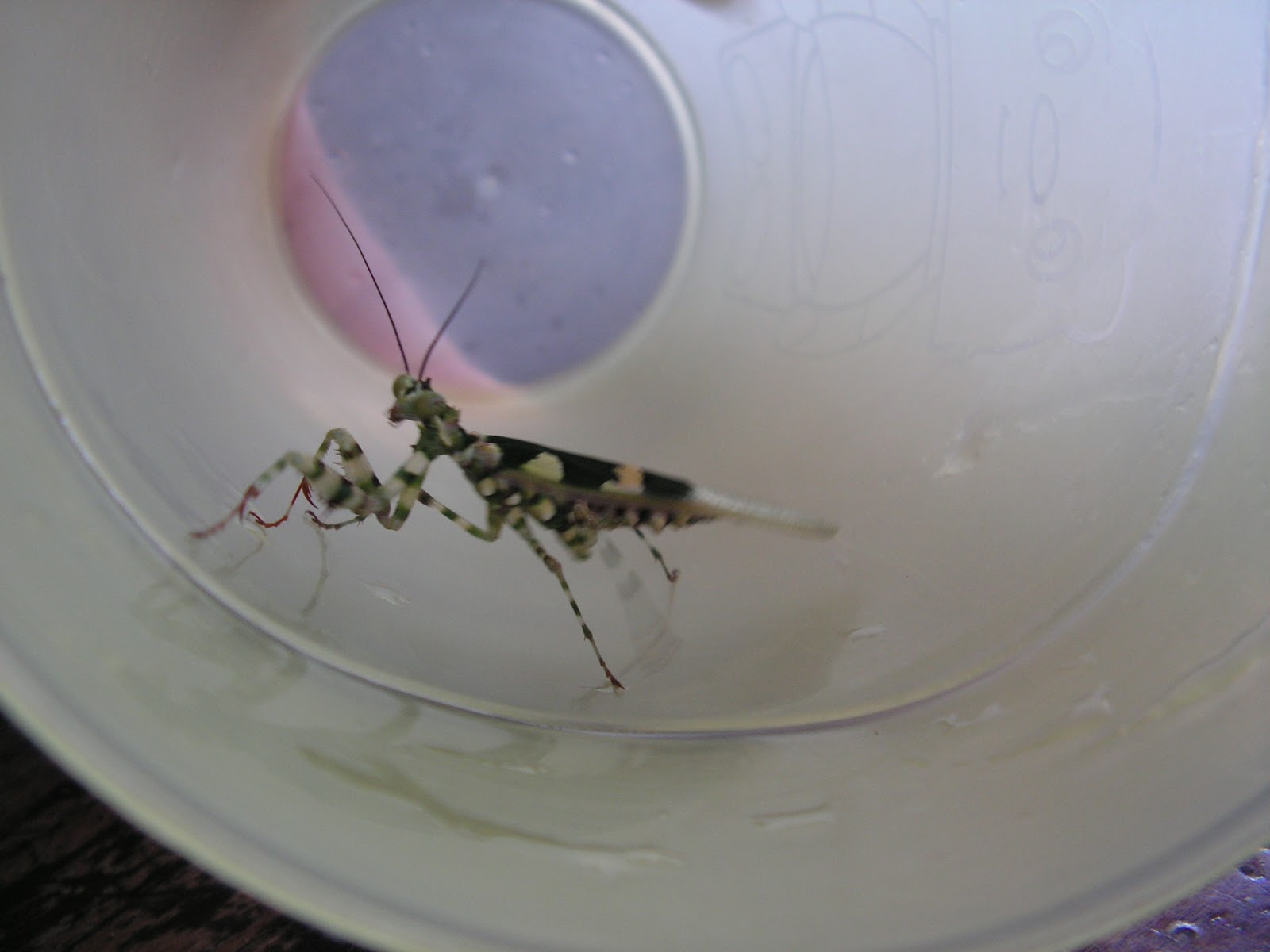
Gotta get my inverts in here - preying mantis in cup

THE KASIISI PROJECT:    Where do I start?  I guess I should start at the part where one year ago I was invited to visit a project in Uganda called The Kasiisi Project.  I met a woman named Elizabeth Ross at the “In-Situ Zoo Conservation Educator’s Conference” at Brevard Zoo a year ago and told her I would most likely be in Uganda before the end of 2010.   I just spent 4 days at her project in Kibale National Park, 5 hours directly west of Kampala, on the edge of DRC.  In fact, this is the same NP that Richard Wrangham, the male version of Jane Goodall, has completed 30+ years of chimp research.  While Richard was running around in the forest studying chimps, his wife established a non-profit to improve the community schools on the edge of the park where they are stationed, called The Kasiisi Project.
Some of the main goals of the Kasiisi project are to improve school buildings, build latrines, provide lunch (porridge), give out scholarships to the best students, provide extra support to girls especially during the sensitive time when they become women, and teach environmental education through classes and through Wildlife Clubs.  Wildlife Clubs are supposed to be in action in every government school, in fact all schools have many clubs.   Elizabeth asked me if I would like to become a volunteer to strengthen the Wildlife Clubs within this area.  With free transport and a place to stay, I agreed.  Starting in May I will visit between 5 and 14 targeted schools twice a month.
One of the goals (as agreed on by each school and Kasiisi) will be to start or continue a vegetable garden.  The soil in western Uganda is volcanic, which is highly fertile.  One of the schools had mature banana trees and cabbage, and it looked like a well—established garden. When I asked how long it took to grow these plants she said she started this garden from scratch less than 6 months ago!!  I was flabbergasted and it gave me lots of hope that this goal shouldn’t be too difficult to establish in other schools with a little funding.  The funding is already there, which is a huge help!  Then the produce is sold in the market and the profit is used to buy the next season of seeds, or perhaps to go into another Wildlife Club project.  Because Uganda has two rainy seasons, growing is not difficult, which is one reason the country is called the Pearl of Africa (and also the Breadbasket).  The picture of the big tree is to demonstrate how quickly things grow, this one was planted by Richard in 1991, but just needed some elephant dung to take off!
Other goals of the Wildlife Clubs might be to teach how to plant trees and plant more trees on school grounds, make paper machete chimps and masks to use in plays directed by the students, show movies that teach how to properly wash hands and why, show conservation movies about over-grazing, healthy water, deforestation and waste management produced by Jane Goodall institute and UNITE.  There is funding to bring the Wildlife Clubs on field trips to Queen Elizabeth National Park, Kibale (their backyard; they would never be able to afford the entrance fees), and a one week overnight Camp Uganda experience at UWEC (Uganda Wildlife Education Center where I will hopefully be volunteering at too – see blog #4).
There were 3 other Americans visiting for the week, fundraisers of the Dobbyn Foundation, which raise money for the Scholarship Program.  Kevin, Bill and Akshita got to meet face to face with the scholars that they support. We also went chimp tracking together.
CHIMP TRACKING
For $90 each we followed one male chimp for 3 hours. For two of the hours though, he was sitting in a tree and we all took descent pictures with pretty bad backlighting from the sky, but at least it was overcast.  I was happy that at least we got to see a chimp because during the drier season, when fruiting trees are scarce, chimp groups don’t vocalize to other chimp groups because they don’t want to share their food.  So even though the male chimp we were hanging with only vocalized once to his friends while drumming the buttress of a fig tree, not one chimp answered back.  When chimps want to move fast in the forest, they come down from the tree and walk on the forest floor.  Mgze allowed the 7 of us to follow him on the floor, 15 feet behind him, for 45 minutes, until he went up another tree.  It was time for us to hike an hour back to the station.  Had been a whole family on the floor it would have been a more intimidating experience, though thrilling no doubt.  Chimps are strong, unpredictable and can be really aggressive.  Chimp lovers, am I right? 
LAST BUT NOT LEAST!!
All in all, the highlight of the week was the plethora of [RARE] animals in the forest, like black and white colobus, red colobus, red tailed monkey, bush baby, and over 300 birds and butterflies… AND running into a group of forest elephants. Well not exactly.  I didn’t actually see them because the person I was following suddenly turned back towards me and started running down the trail from where we had just hiked (of course I followed with speed!).  You see, forest elephants in this area have a tremendous reputation for chasing away people, for more than just 200 yards.  Even the guides change course once they see/smell that elephants are close.  Luckily this female was not interested in us. 
Other excitement: huge troop of olive baboons rampaging through the research station banging on tin roofs and entering people’s open doors (exciting but not cool), we had to chase them away, it’s called “hazing”.  Colobus monkeys taking a nap in the front yard above us while we eat lunch.  Catching really cool insects to photograph.  Watching a beautiful bee eater (bird) sitting on two eggs in a hole in the ground.  Ironing all clothes to keep from mango fly larvae crawling into your skin.  Eating yummy traditional food.
In case you were wondering where Dom was all week, he had to host all the Deans of the University of MN and Makerere University Vet and Public Health schools.  Breakfast meetings, lunch meetings, dinner meetings galore. Tomorrow he leaves for a conference in Rwanda, and I pet/house sit for some workmates who will also be at the conference. I will then meet Dom in Rwanda in a week and we will stay a week. Then off to another conference in Paris, this time I am tagging along, you bet your bottom dollar!  By March 1 we will be back in the States and look forward to seeing most of you we hope!  As long as I can get to internet, I will blog about each week coming up.

Thursday, January 27, 2011

I'll Give You a Good Meal if You Castrate My Pigs


Herbert's pig house in rural Uganda, just outside of Kampala


Herbert loves his pigs


Herbert (second in from right) and his wonderful family


My new FB profile pic, can't get enough of these piglets!


This one was named Dominico after you know who because he invested in Herbert's farm.


Dominic and his photographer trainee

Boy is it great to hang around vets.  They do the dirty work, I photograph and practice my Luganda, and we all get a great meal in the end.  Dominic, Mac and Jonna are all vets, but I just love animals. Together we make a good team in Africa.  Everyone needs help with their animals, whether it is a dog, cat, pig or chicken, and of course they all want help for free.  We have a work friend named Herbert who has a busy but lovely farm in the rural area just outside of Kampala.  He invited us over to castrate his piglets, and we received a yummy traditional Ugandan meal, not to mention a peaceful afternoon from the polluted, crazy city in return.  His family is wonderful, and they love their animals too, which is a rare attitude to find in these parts.  As in the states, the animals are for growing and selling. 
Lunch included: bananas for a snack, pilau (flavorful rice), peas in the tastiest brothy sauce ever made, beef with broth, and the infamous bean-sweet potato mash, much like a sweet re-fried bean for all you Mexican food lovers.  A tray of perfectly ripe, juicy pineapple was for dessert.  Mmmmm good!  This meal takes a long time to cook and to buy the goods, so most Ugandans do not eat like this every day.  Having mazungus in the house can be a big deal, and if they come to fulfill a favor it is even a greater deal.  Not to mention the day was a holiday, Liberation Day, the day that the army marched into the capital in 1986-ish, so the whole family was home and Mac and Dom were off work =)   Herbert’s family was extremely welcoming and they are very warm people.
Piglets really are the cutest things I’ve ever seen.  If you haven’t noticed I have become quite the pig lover, one day we will have our own, with chickens!  I think I will start a pig orphanage, or better yet I will become a surrogate sow.  Farmers can give me a few piglets that are weaned, and I will fatten them up while giving them lots o’ love and a nice yard. They will be sold for the mazungu price and will have lived a nice life, or go to the farm to become mommies.  I like the latter idea better…
Anyway, the castration was “quick and easy”, and I won’t go into detail or post pictures, I’d rather forget I observed it all together.  The piglets scream and sound like little babies, that’s the worst part. But again, it’s “quick and easy”.  Sorry if you have a tough stomach and wanted to see. Dom has video.
Herbert and the family also have turkeys, chickens, very loud ducks, and guinea fowl.  They are healthy and happy.  The ducks and the guineas are used mostly as alarm system as the ducks can be quite territorial, and the guineas freak out if a predator is in the area.  There is a fish farm down the road managed by a Peace Corps guy.  We all took a walk and ran into a few cows tethered in the grass and munching away.
It’s getting hotter and drier here day by day.  It used to be bearable to walk in the sun during midday, but now you want shade at all times and it is no fun running errands midday.  At least it is mostly dry heat.  However, none of this is worse than the cold and snow you are having, sorry folks (we’ll be back in a month).  The next rains are expected at the end of February, this will cool things down, however these days Ugandans have learned not to have many expectations about the weather because the climate is changing.  By the way, I heard 3 airports on the East coast shut down again?  Yikes!  At least the Premiership is not playing in snow anymore.  That was ridiculous!  All of the games were re-scheduled after the Uganda newspaper we had with the full 2011 schedule was printed.  Hooray for the iPhone!   

Thursday, January 20, 2011

Wrestling Pigs

On Tuesday, I was invited to work with an African Swine Flu (ASF) team, through Makerere University in Kampala.  ASF is endemic to Africa and this research will add to what is not quite known.  Karl, a Swedish vet and PhD researcher, has been studying this disease for over a year now, taking samples from domestic pigs outside of Kampala.  I was invited to help this week. The first site was in Kalangala – in fact the same place I spent Christmas this year.  Luckily the disease does not spread to humans, but is extremely contagious to domestic pigs.  Warthogs and bushpigs carry the tick-borne disease with no symptoms.   

We drove 2.5 hours to the southwest of Kampala to catch a (FREE!) ferry to bring the equipment to the island (1 of 70) in Lake Victoria. The ferry ride was flat and only 45 minutes, phew. The drive from Bukakata ferry launch to Kalangala is one hour exactly.  You should have seen the dirt that came out of my hair and laundry when I got home, yuck, and the snot in my nose, sorry!  Lots of dust and bad roads, but at least they were doing construction. Hey, it’s like I’m back in Chicago!  We visited one healthy pig farm before we visited an infected farm. The second farm was actually a group of pigs owned by many farmers, housed under the same roof. This is a very common set-up here.
Here is a picture of me wrestling a pig.  It looks like the pig is winning, but really my huge muscles are engaged and I am popping out of my shirt (yes I gained weight this week!). Ha!  So they use this ugly thing called a snare that catches the pig in the mouth. The pigs do NOT like this at all and I don’t blame them!  I felt bad using it, they scream and make a scene, and they can’t wait until it is all over.  Me too.  A wildlife vet, Dennis, took blood from the jugular, and this was actually when the pigs quieted down.  The whole time I was dreaming of having a bucket full of carrot pieces to reinforce them positively (i.e. thank them!) for their discomfort and blood.  I also wanted to say hello to my warthog buddy, Sammy, from Lincoln Park Zoo (these animals are so smart and have feelings too =) I was very grateful when I woke up the next morning having not dreamt of screaming pigs. 
P.S. This is why I didn’t become a vet.  Sadly, these pigs could be dead within a week, this disease is no joke and there is no vaccine.  You won’t hear about it in the US or UK because our governments won’t let it in as you can imagine.
I go out again tomorrow to help, this time in a district on the “mainland”, about an hour outside Kampala.  Wish me luck!  Piggy-Poo to the rescue!

A really healthy pregnant pig. This is what you (and I) eat, isn't that sad?? Don't think it doesn't make me want to be a vegetarian.


Karl and the Makerere truck


Monday, January 17, 2011

A fun and busy weekend in Uganda


On Saturday, Dom and I were invited to go behind the scenes a Uganda Wildlife Education Center (UWEC) AKA. Uganda Zoo.  This is the most impressive African zoo that I can ever imagine exists (though I have only seen one other so don't quote me, but I can't imagine anything nicer, really).  The land is owned by the government and is ON beach front property (LPZ comes close).  The green areas are astounding, large trees and vegetation and parks, it is beautiful.  The restaurant/cafe looks out onto the beach, where you can walk and swim, and the birds include egret, crowned crane, ducks - the white ones, hammerkop, Egyptian geese - all the same as the ones from Ssese Islands.  It's fun to see them all hanging out together and everyone gets along.  While drinking our tea during a short storm, 3 camels walked by with their keeper, who eventually got frustrated with two of them when they decided to sit down in the grass and not get up.  The stories are true, camels are notoriously stubborn, Dominic is a close second.

David, the education officer, spent quality time with us.  He started explaining the Outreach Program.  This is no ordinary travelling zoo.  UWEC brings lions and 150lb boas to the schools.  Ummmmmmm I had a little problem with this, but like a good girl, said nothing.   He showed us the snakes, the rare shoebill stork - very cool looking indeed- and then brought us to the giraffes =)  They aquired 3 young giraffes and they want to provide a giraffe feeding service to the patrons, who buy food and stand on a deck at the height of the giraffes.  David said the giraffes don't go to where the deck is, and he wants to start traiing them to do so....ummmmmmmmmmmmmmmmmmmmmmmmm right down my alley.  My eyes perked up and i mentioned a few ideas and then decided i better shut my trap.  Anyway, it semms this may have left David with an impression - I certainly hope so!

We saw the vet cliinic, which was very advanced for any African zoo, and they need just a few new gadgets that are broken or very out-of-date.  Dom is hoping to help them acquire such things. Lincoln Park Zoo finds old, but working vet gadgets from across USA to send to places like this, so hopefully we can make the connection...The primary vet showed us the quarantine areas, and told us a story about how they received 4 small boxes of grey parrots stuffed inside. They were confiscated in the pet trade, and 130 survived and are housed at UWEC.

At the end of a great tour, I was encouraged to apply for their volunteer program.  I am very excited for the opportunity and will let you know if anything happens.

Sunday, Dom and I went rafting on the Nile with Jonna, Mac, J.C. and a random English girl travelling the world between University and real life.  I had never done a full day of rafting, just a few hours here and there.  It was awesome, but for this kind of rafting there is no way not to get dunked somewhere along the way. We went over 10 rapids! The raft flipped 2 or 3 times, I'm still burping up the Nile but my sinus headache is going away.  It was a blast though!!!  4 hours of excitement but also long stretches of paddling, which is what I haven't experienced in the States.  During the last paddle a small storm decided to start blowing wind against us.  But we fought through it and luckily the storm blew past.  When we came up to a level 6 rapid, we all had to park the rafts and walk through a lot of big and small rocks (they didn't let anyone wear shoes the whole trip).  It was funny to watch the local Ugandans, who live on that side of the river, enjoying watching the blinding-white mazungus baring their skin and acting like crazy people throwing themselves into the rapids.  We really are a sight to see!  Unfortunately, Dom's sunburns are worse than mine, despite our best efforts to keep on sunscreen.  Bare, blinding white skin + sun + equator + 4 hours = red skin.  The tour operator fed us well. The BBQ at the end was phenomenal, beef skewers, veggie burgers - more like potatoe pancakes, avocado salad, rice and green beans, german potatoe salad, and chipati - basically an oily flour tortilla - soooo good!   We will never forget Nile River Rafting because our sore muscles will remind us! 

Oh yeah, and we stopped by Stone Pub for more pork on the way home from UWEC. mmm mmmm good.
Many more pics can be seen on FaceBook.